Why should Delaware Care?
Delaware gives cities and towns the option to put proposed changes to municipal charters to a vote of the people. While such direct democracy hasn’t been used often in the state’s history, one Wilmington councilwoman hopes to see that change. But she faces resistance from colleagues.
A majority of the Wilmington City Council blocked an ordinance on Thursday that would have clarified rules governing how the municipality holds referendums that allow the public to directly vote on significant changes to the law.
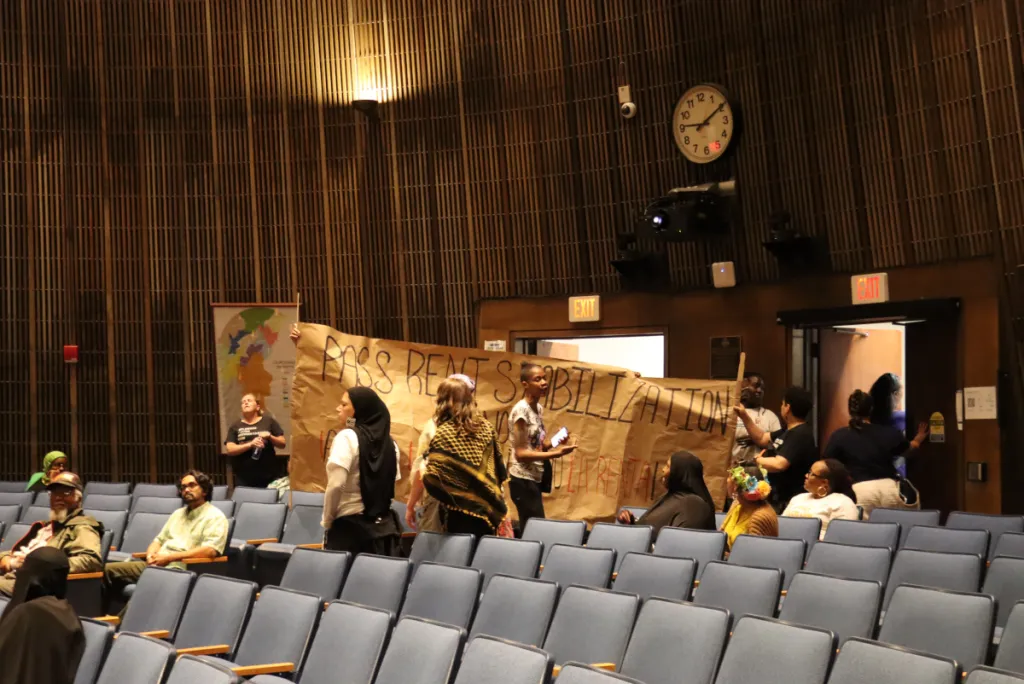
The council’s vote came three months after Councilwoman Shané Darby said she wanted the city to hold a referendum on a proposal to limit how fast landlords can raise rents. She made the comments in June after the council struck down a rent stabilization ordinance.
Darby, a firebrand local politician who sponsored Thursday’s ordinance, has said she would also like bring several other proposals to a referendum. But because Wilmington hasn’t held a referendum in decades, Darby said existing rules for how to set one up are not clear.
And despite calling for a referendum on rent stabilization last June, she said Thursday’s vote did not target a specific policy. Instead, she said she designed it to clarify the referendum process.
Still, four council members spoke critically of the entire referendum process during the Thursday meeting.
One asked about the cost of holding an election. Another scrutinized how the city clerk would verify signatures collected to get a referendum to qualify on the ballot. And another asserted that the ordinance would disrupt the power of elected officials.
“We worked hard to get in office, and it just looks like it just diminishes your position,” Councilwoman Zanthia Oliver said.
During the meeting, Councilwoman Michelle Harlee also expressed concerns around what she called gerrymandering. She described a hypothetical situation where qualifying signatures needed for a referendum were gathered from one corner of the city. She suggested that situation would be inequitable.
“What would keep an individual from going after just special groups that they may be affiliated with to get them to put their names and addresses on there, versus it being equitable across all eight districts,” Harlee said.
After the discussion, Darby’s measure failed by a 4-7 vote.
A loose coalition of largely progressive councilmembers voted in favor, including Darby, Christian Willauer, Coby Owens and Council President Trippi Congo.
Councilmembers Harlee, Oliver, Yolanda McCoy, Maria Cabrera, Nathan Field, James Spadola, and Latisha Bracy voted against the measure.
Councilmen Alexander Hackett and Chris Johnson were absent.
The process today
Under current law, Wilmington can already hold a referendum to amend its charter, which is like a constitution for a city.
The process starts with a petition signed by at least 10% of city voters — which currently would total a little over 3,600 residents. Once that occurs, a seven-member charter commission can draft a proposed amendment, hold public hearings, and ultimately place the measure on a ballot.
Darby said the last referendum in the city occurred in the 1990s.
If a majority of city voters approve a measure, it moves to the state level, where two-thirds of the General Assembly would have 30 days to veto it. If the legislature takes no action, the amendment becomes law.
While the process outlined in the law is lengthy, Delaware statutes do not specify how several of the steps in the referendum process should be carried out. Those include details about information needed from voters who sign a petition; whether a petition can be electronic; how signatures are verified; and how the nomination process of the seven-member commission occurs.
Now, Darby says any future referendum could be chaotic because those questions have not been answered.
“We can do it already. However, without process, we know there’s room for error, there’s room for chaos, lawsuits, and just complete lack of knowledge of how to do anything,” Darby said.